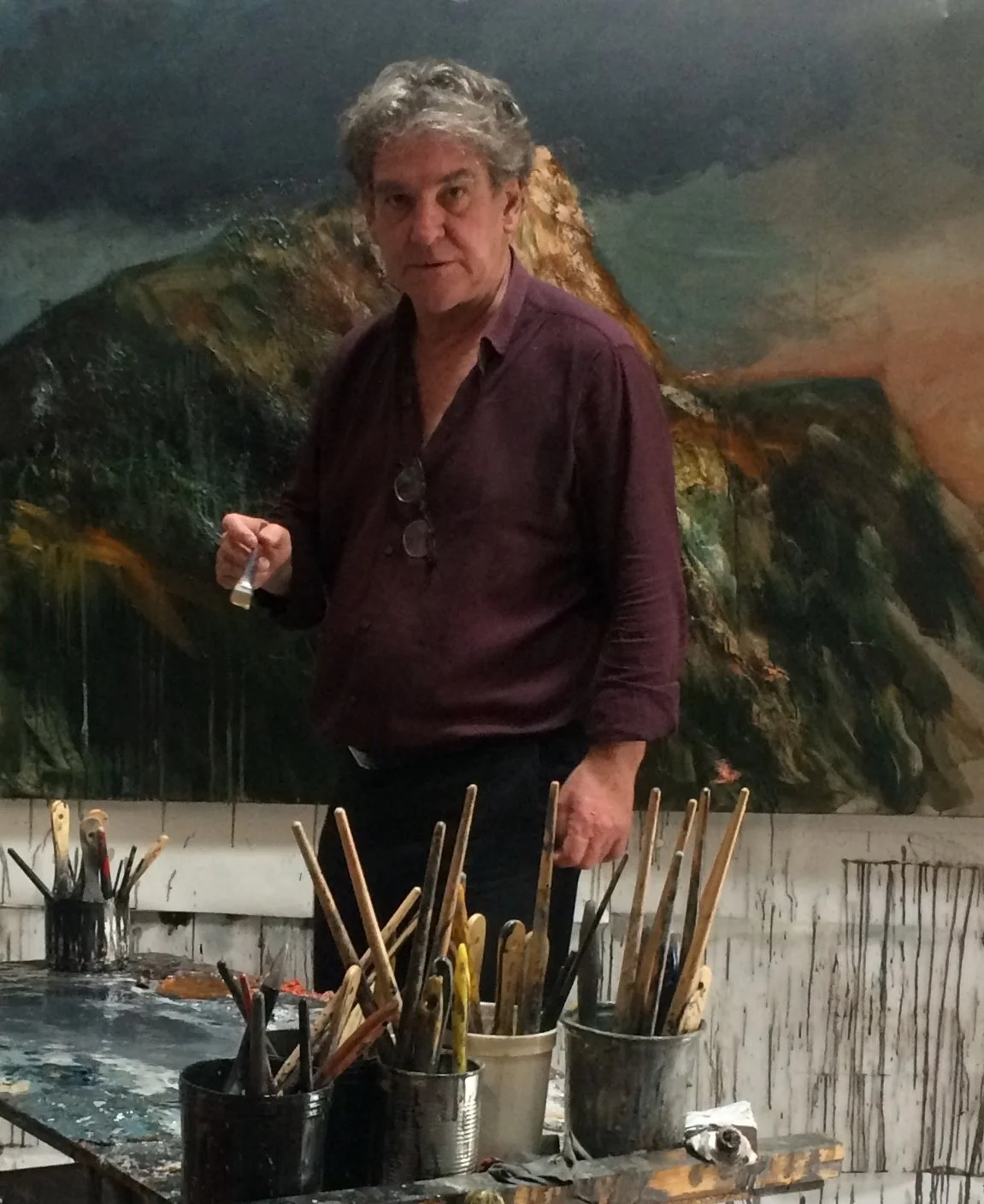
The artist
Born in Bogotá, Colombia, in 1952, Arturo Denarváez is a self-taught artist who grew up in a family where the atmosphere was conducive to the arts, with a father who was both a musician and a draftsman, and a mother who was a painter.
From an early age, he felt the urge to travel and discover the world, and as early as 1974 he set out across France with his pencils and colors in hand. He then discovered Paris, a symbol of freedom.
He established his studio in Montreuil in the late 1980s, where he has worked ever since, exhibiting widely throughout France, Europe, and both North and South America.
PRIZES
1991 — First prize in the competition for the logo of the Montreuil Sports Organization (OMS)
1992 — 22nd Painting Festival, Cagnes-sur-Mer
First Prize of the Jury.
Arturo Denarváez has worked with the following galleries
-
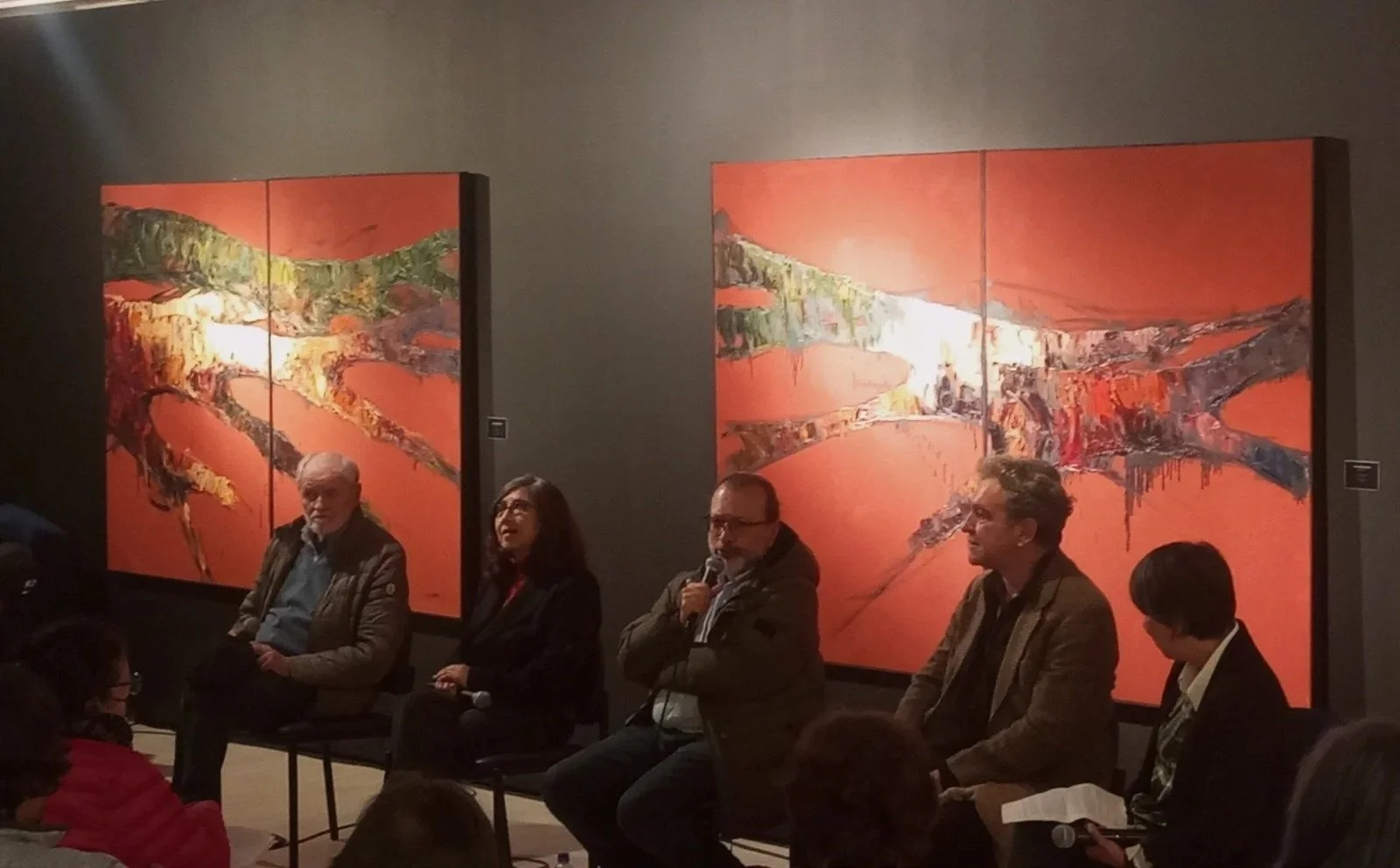
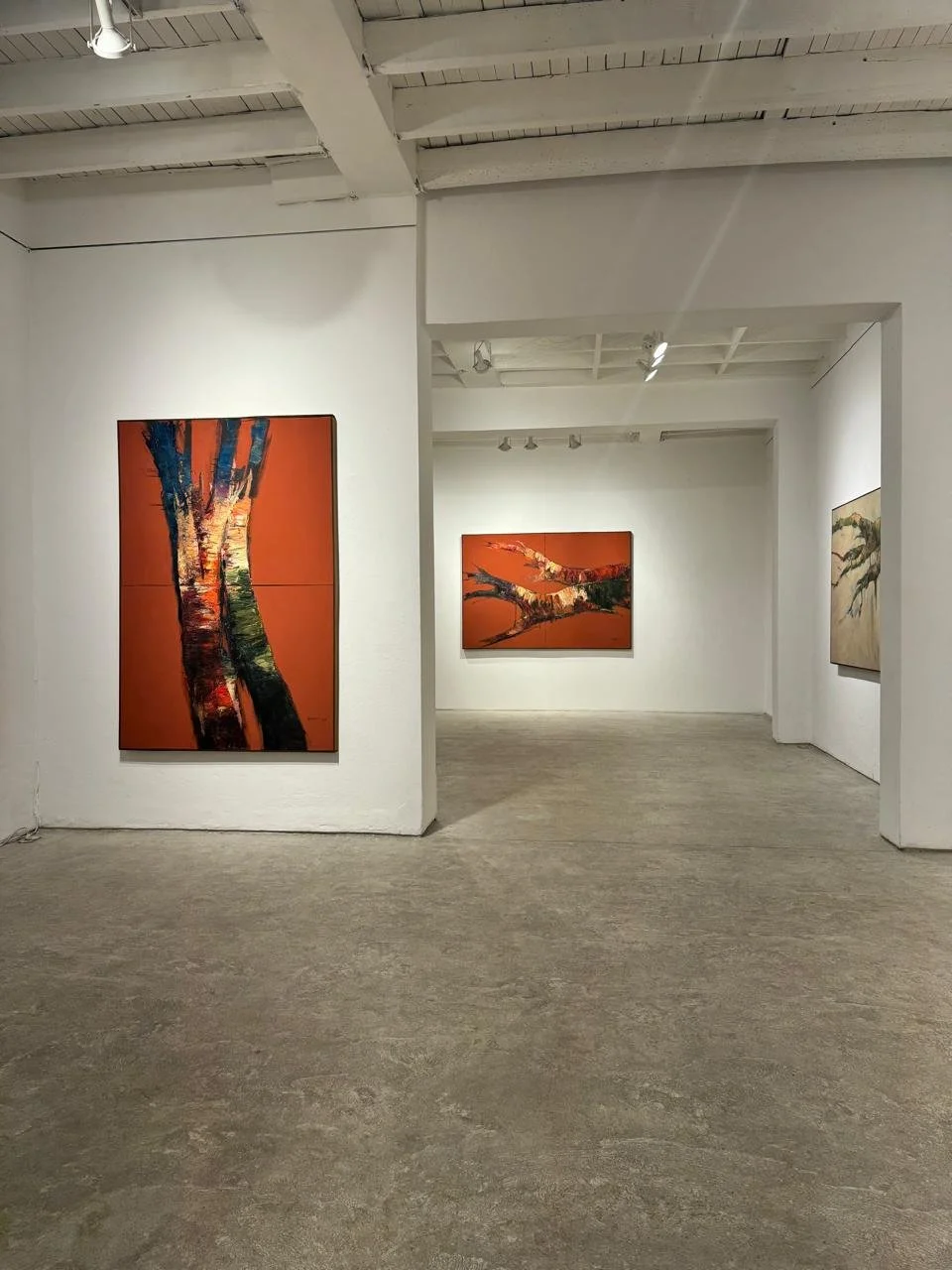
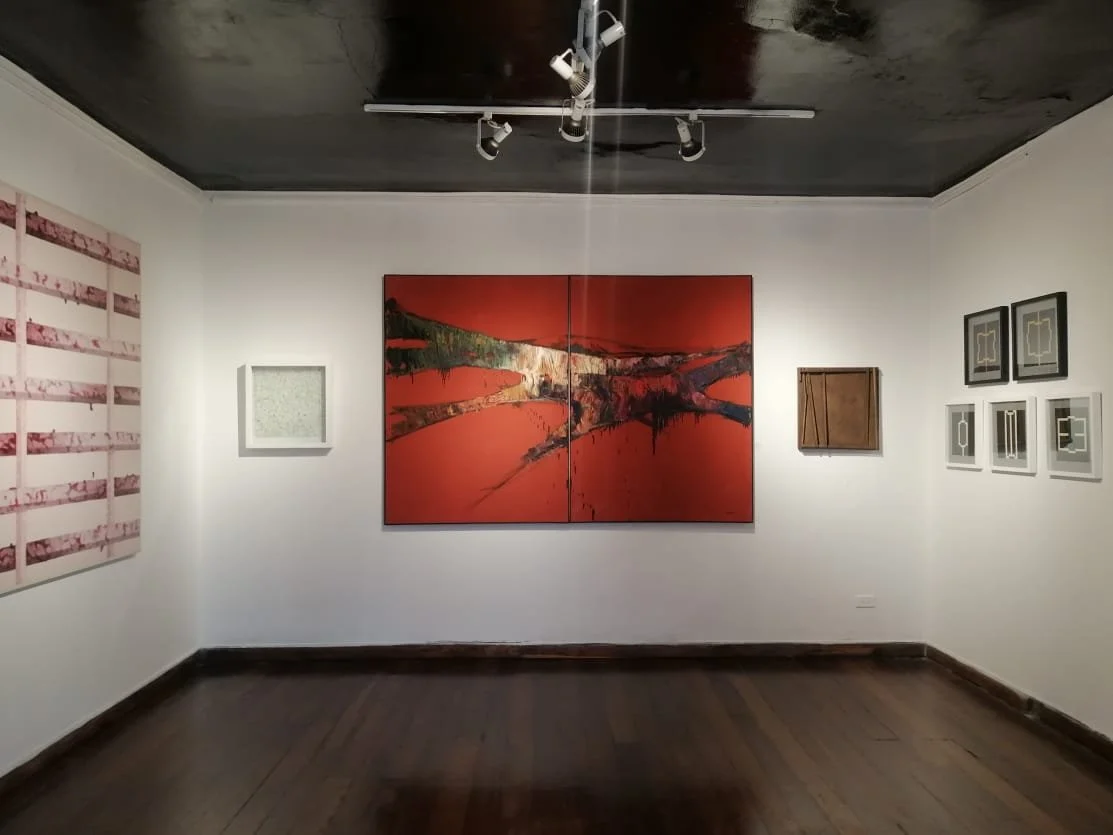
Arturo Denarváez presented his work Selva Adentro at the prestigious Alonso Garcés Galería in Bogotá this Summer 2026, from May until August.
Founded in 1977 in Bogotá, Colombia, Directed by Alonso Garcés and Reinaldo Annicchiarico, Alonso Garcés Gallery is one of Colombia’s leading contemporary art galleries, recognized for nearly five decades of work in the promotion and dissemination of national and international art.
The gallery presents an average of eight exhibitions annually, across painting, photography, video, installation, and other contemporary media.
Bogotá, May-August 2026
-
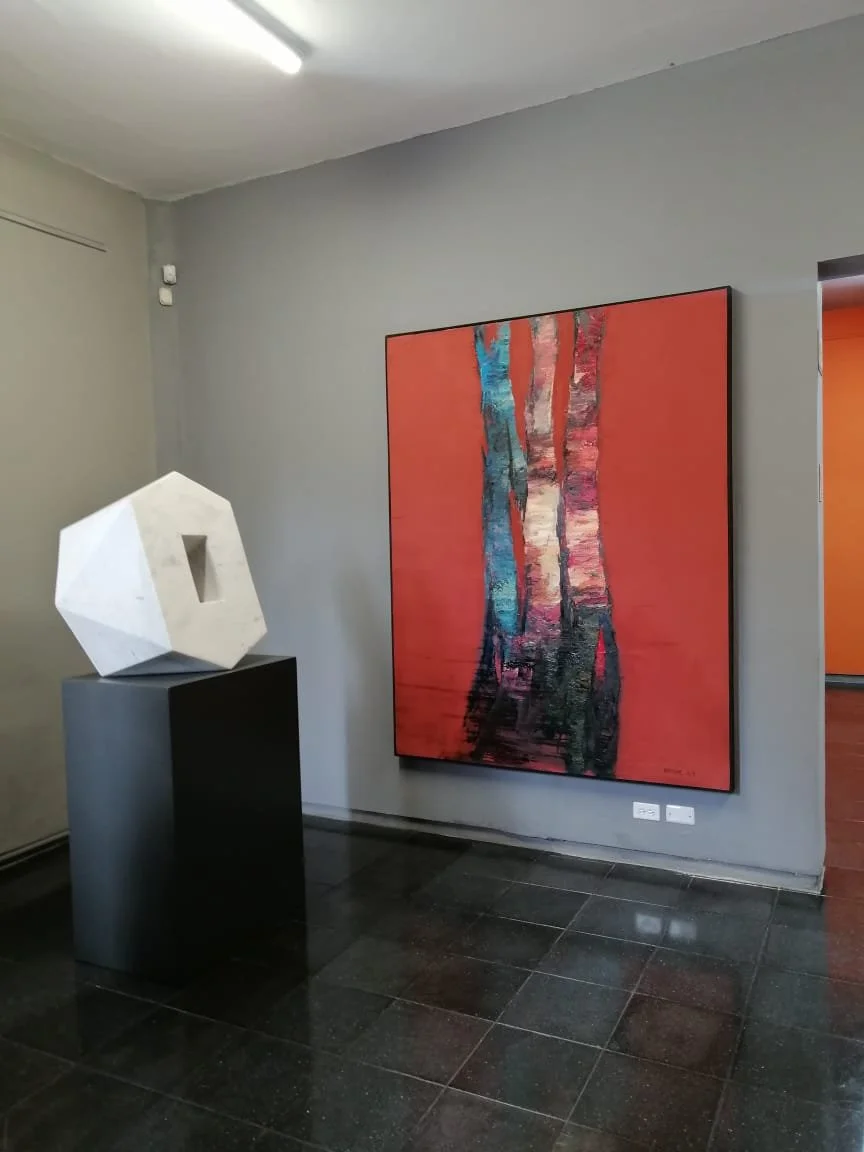
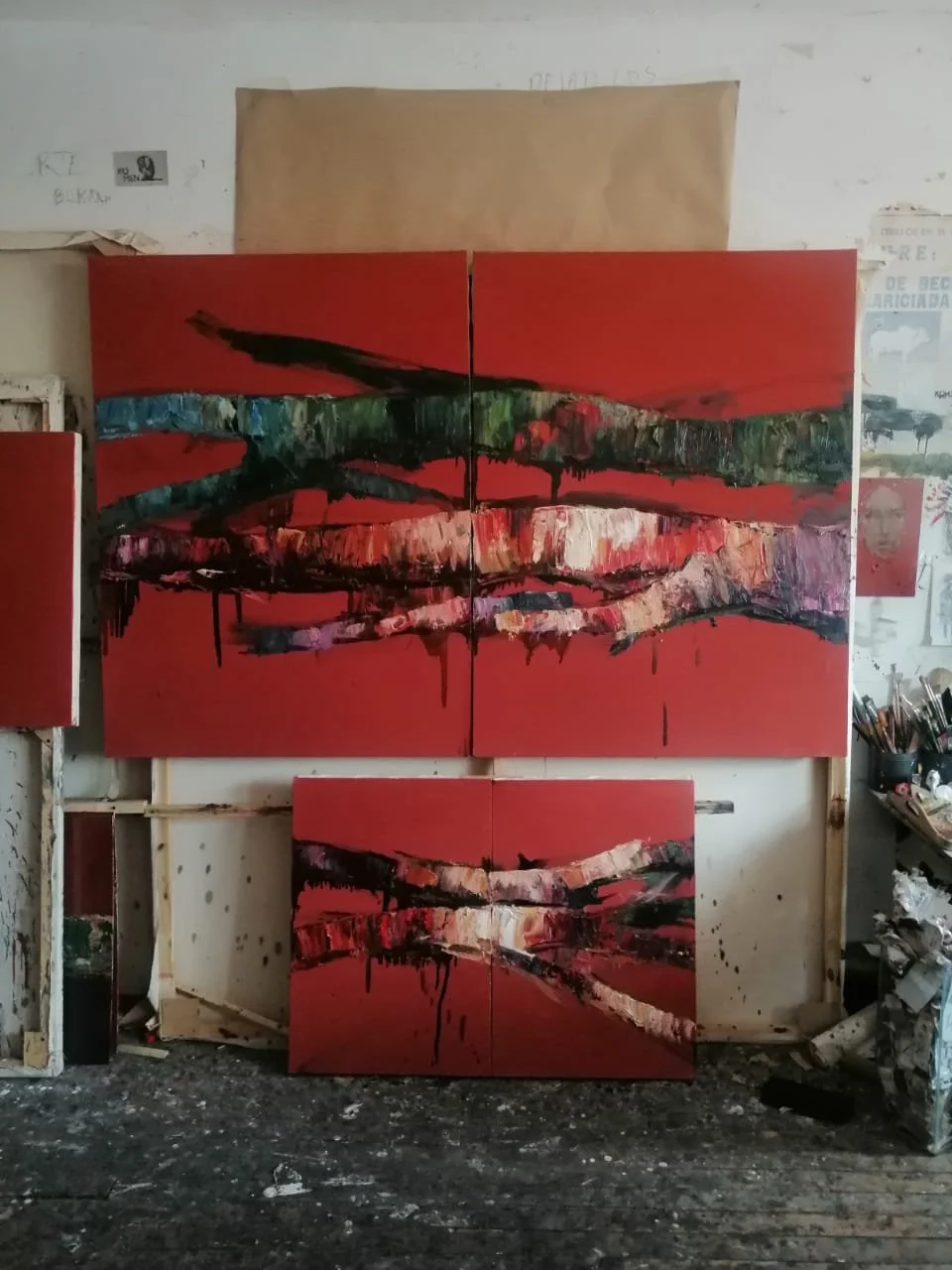
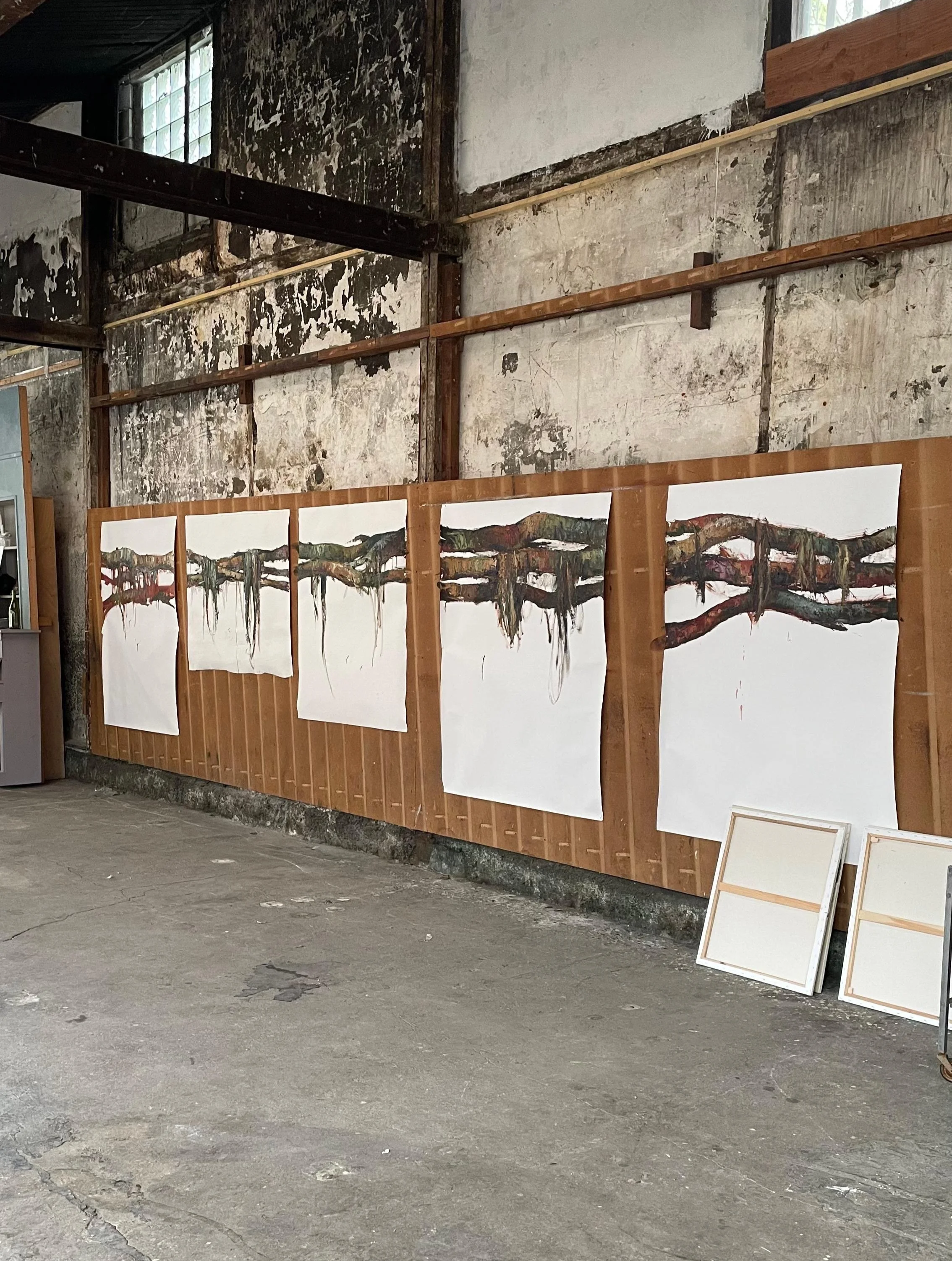
Selva Adentro is the continuation of a series of large-format paintings that the artist began creating in Colombia during the pandemic. This series initially bore the title Nomen Nescio, without a name. In it, black and white dominate the composition, carrying emotion into a solemn, restrained aesthetic space: a cold, neutral realm, a limbo in which tensions and ruptures give form to absence, to emptiness. That which has no name, yet persists as a tangible and symbolic presence.
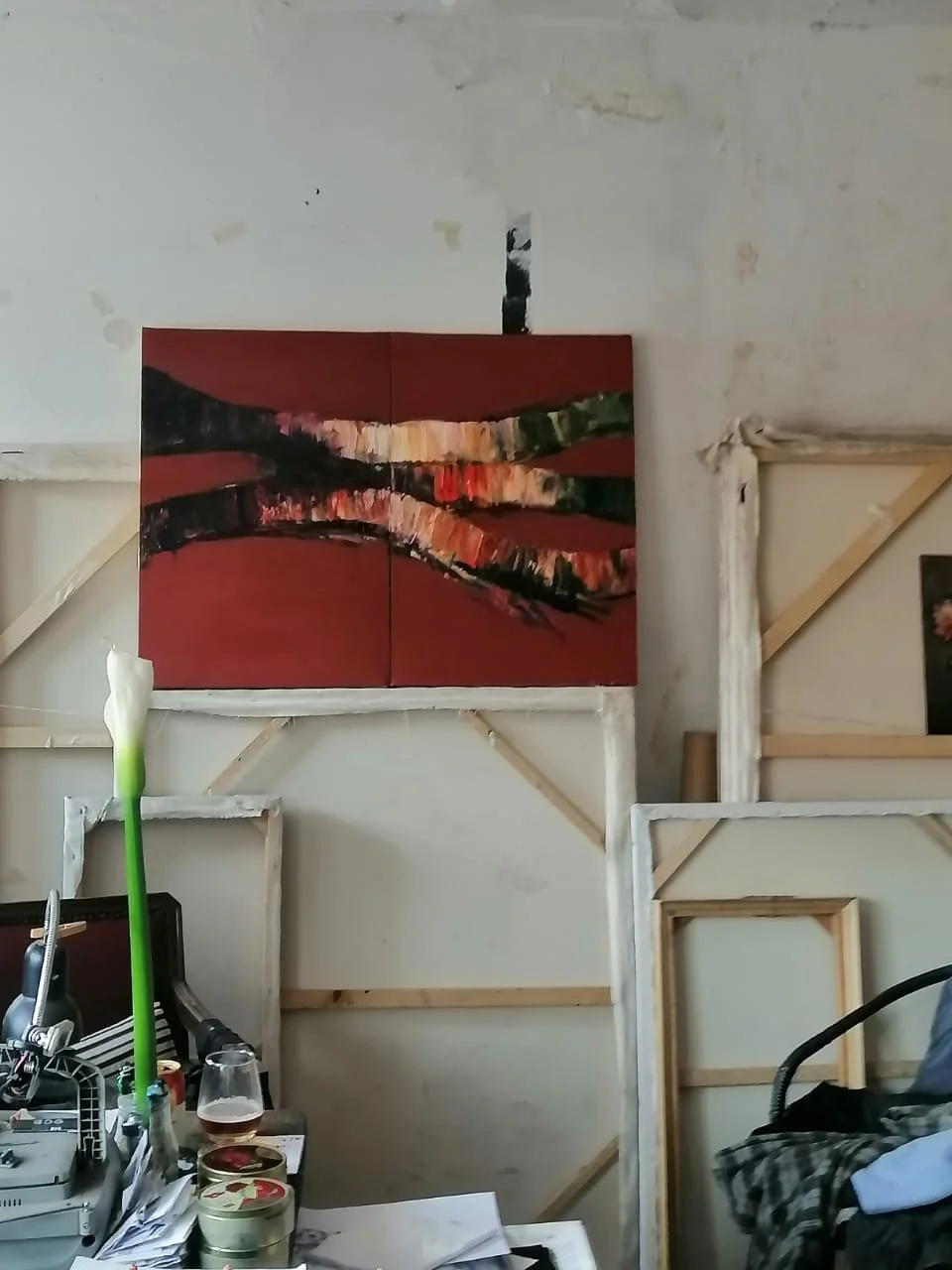
According to its creators, the viewer bears witness to what remains as evidence of having been, of having existed. In Selva Adentro, DENARVAEZ turns to color—vivid red—to a chromatic range that suggests skin: human skin, vegetal skin, bark; intertwined limbs, organic forms, branches, vines, tearing and knots, vestiges that evoke what was, is, and will be life. Hence the title of the exhibition.
“In these paintings there is matter, tension, rupture. Everything is organic in a way that is both vegetal and human, because it is nervous and visceral: everything is fiber, muscle, trunk, and branching; yet we also feel that everything is at once vital pulsation and decomposition. An exploration into the entrails of living matter, where the jungle and the organism are one and the same, where life and death are manifestations of a single miracle and a single tragedy, where matter is spirit and, in its contortions, releases a cry that is at once painful and triumphant,” affirms William Ospina.
2024
Bogotá, Colombia -
2024
Bogotá, Colombia -
Las metamorfosis retrospective
2014
Bogotá, Colombia -
The Colombian painter Arturo Denarvaez presents a series of monumental, larger-than-life works on the myth of Icarus, expressing a fascination with all that flies, which he connects to our human condition, poised between sky and earth.
2011
Montreuil, Franceon de l’élément -
In November, Nancy Olivier welcomes the Colombian painter Arturo Denarvaez to Espace 111 for the first time.
He presents a group of paintings dating from 2005 to the present, brought together by the continuity of their theme, the myth of Icarus, and also by a kind of stylistic synthesis that has stabilized in recent years around a powerful form of figurative expressionism. Although he does not claim allegiance to any school, if such a notion still holds meaning today, the artist likes to modulate his pictorial approach according to his subject. At times the line becomes more precise and the forms more abstract, at others the gesture grows broader and the colors more intense. While he acknowledges a deep interest in Bacon as well as in Spanish painting, Goya, El Greco, Zurbarán, and above all Velázquez, Arturo Denarvaez paints what moves and questions him, what nourishes his reflections and his dreams, as a way of transcending lived experience. In this way, he situates himself within an exploratory approach to painting, working in series that respond to existential questions that are both contemporary and enduring.
Beyond this, the works presented here reveal the fascination he has nurtured since childhood for all that flies, birds, airplanes, and other machines. This fascination is telling when one considers what the ancient human dream of rising into the air, from Icarus to Leonardo da Vinci, holds symbolically. Arturo Denarvaez’s work has always been rooted in a reflection on levitation, elevation, the breaking free from gravity, perhaps uprooting, the transgression of norms, the act of taking flight. It is also about suspension, the in between, between earth and sky, body and soul, flesh and spirit. It inevitably involves the possibility and the risk of falling, but even more so the rebound, redemption, resurrection, the Phoenix rising from its ashes. These recurring themes in his work echo those that mark the history of humanity and the stories it tells itself, myths of transgression from the Argonauts to Sisyphus or Icarus. Representing the human condition thus appears to be a central concern for Arturo Denarvaez, humanity in its greatness and its misery, as Pascal would say, its struggle against its own condition and its inner tensions, in its beauty and its ugliness, its weaknesses and its strength, in both the sublime and the abject of which it is capable.
Arturo Denarvaez’s painting is a painting of excess, powerful, with bold and romantic chromatic harmonies, in the amplitude of the gesture, oscillating between the weight of living and the grace of existing.
Thus, the title of the exhibition, borrowed from the famous work of the philosopher Simone Weil, illustrates this constant oscillation, even if Arturo Denarvaez’s painting appears more metaphysical than religious, more embodied than spiritual. “All the natural movements of the soul are governed by laws analogous to those of material gravity. Grace alone makes an exception,” wrote Weil. There is something of this order in the painter’s work, first because the act of artistic creation is undoubtedly a form of grace, and also because Arturo Denarvaez possesses a deep awareness that from a state of grace to a fall, only a single beat of the wing may suffice.
2011
Montreuil, France -
2007
Sidi Bou Said, Tunisia -
Brussels, Belgium
-
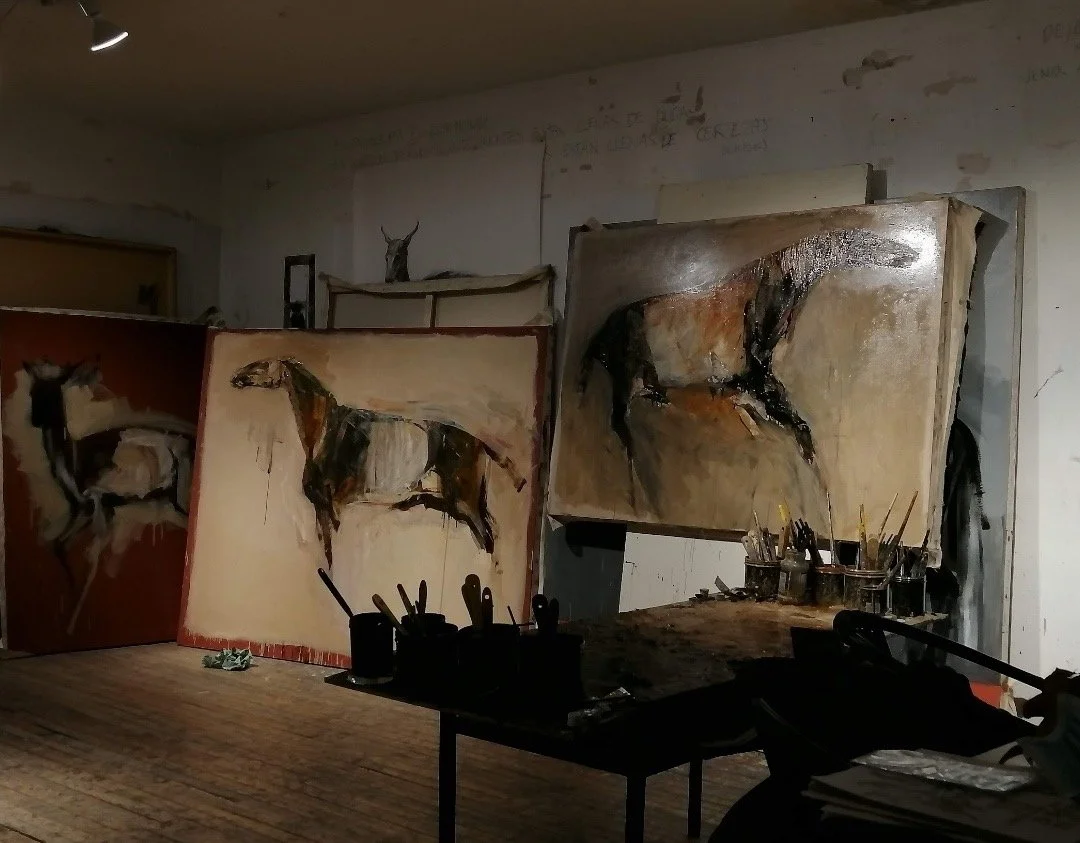
“Liaisons” is the theme of this series of Arturo Denarvaez's work. Protagonists are abstract strange beasts, bulls, horses, or matadors acting with great energy and passion. Love, hatred, lust, violent kiss, fight, happiness, rest, death, hunt, ardent desire and enigmatic face to face are expressed with the impetuousness and warmth of the artist's Colombian origins. The deep and warm colours as well as the strength of the movements give to Denarvaez's works a striking force and unusual beauty.
— Fabienne Robin“The Heart is a Solitary Hunter”. The title of the famous novel written by Carson McCullers seems to describe Arturo Denarvaez perfectly. In his search for his artistics personality and personal equilibrium he has always been a "loner". For instance, although from childhood he has always destined himself to be an artist and expressed himself mainly through drawing and painting, he decided to by-pass formal training at the Bogota School of Fine Arts. To "find" himself, he decided to leave his native country, Colombia, and go alone to Paris, symbol in his eyes of artistic and personal liberty. The right to liberty and a firm denunciation of cruelty are the two principle themes of Denarvaez's work.
But being free is a situation fraught with danger and which must always be defended.Therefore, in the two themes which reoccur most frequently in his art, animals (especially, the horse) and human beings (mainly in the form of nudes), the subjects are often wounded or mutilated. Man and beast are often decapitated or reduced to mere carcasses.
His treatment of the themes varies with his stylistic evolution. The nudes in the 1991 series "The Witnesses" seem to float on the surface of the paintings like ghosts come to haunt a universal conscience. Those of the 1994 series seem to struggle to escape from the heavy environment of thick paint and swirling brush strokes.
Animal and humans are often combined in the artist's works. They can become one as in the 1984 "Centaurs" paintings. They can be associated to perform heroic deeds as shown in the "Saint George" series of 1988 and 1989. They can also be in mortal combat. This is the subject of the works presently shown. Phantom bulls and matadors confront each other. The figures, although charged with energy seem suspended in an unreal and twilight world. Both man and beast are fighting for their lives. However, the subjects and objects found in other Denarvaez's paintings may shed a different light on the current works. The "Skulls" of 1990, the mirrors present in some of the 1993 "Nudes" (humans stripped of all their earthly trappings) are all "Vanities". Perhaps, therefore, it is not life which is so important but something more profound, its very essence, in this case liberty. Perhaps the combat is derisive even vain, it is nevertheless truly essential. The pursuit of liberty must be continued and the cruelty of those who oppose it must be denounced. The works of Arturo Denarvaez do this with force and beauty.
— Caroline DenjoyNew York, USA
Genève, Switzerland
Zurich, Switzerland -
Paris, France
-
London, Great Britain
-
Paris, France
Miami, USA -
Paris, France
-
Paris, France
IN SITU
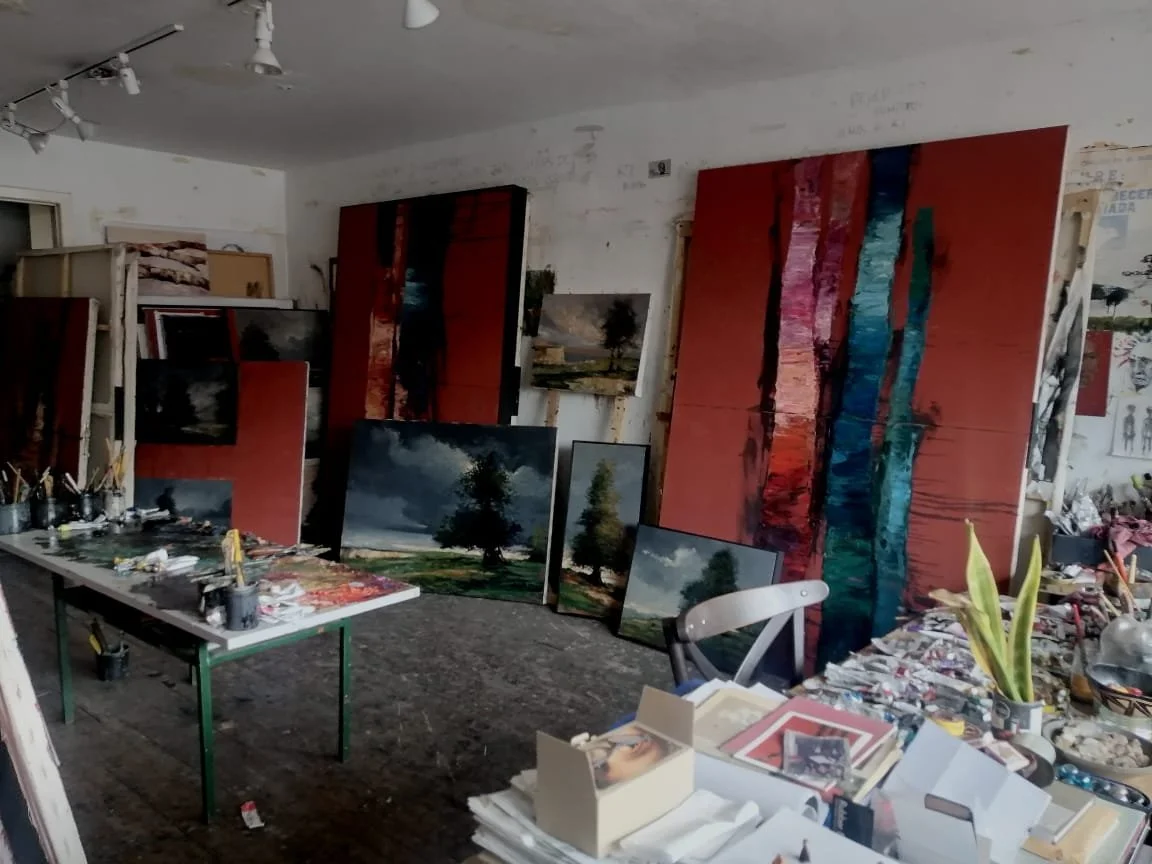
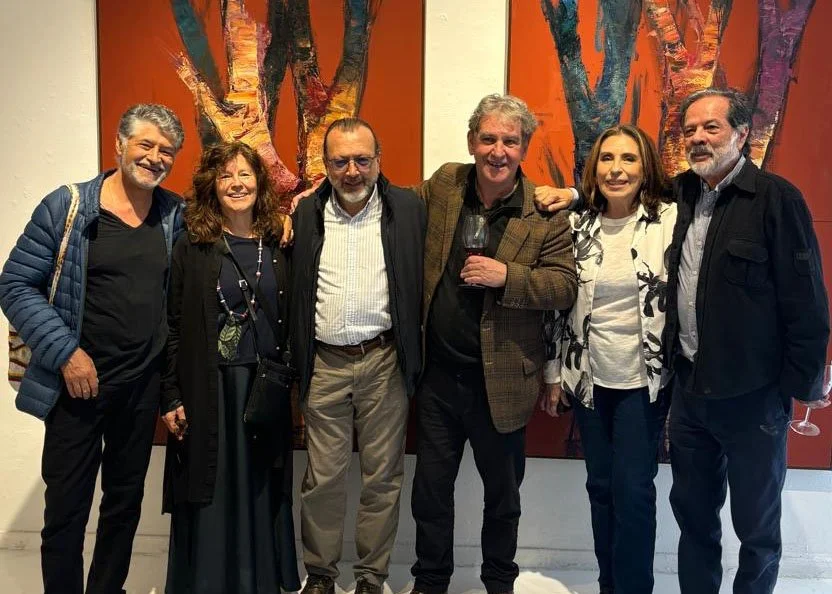
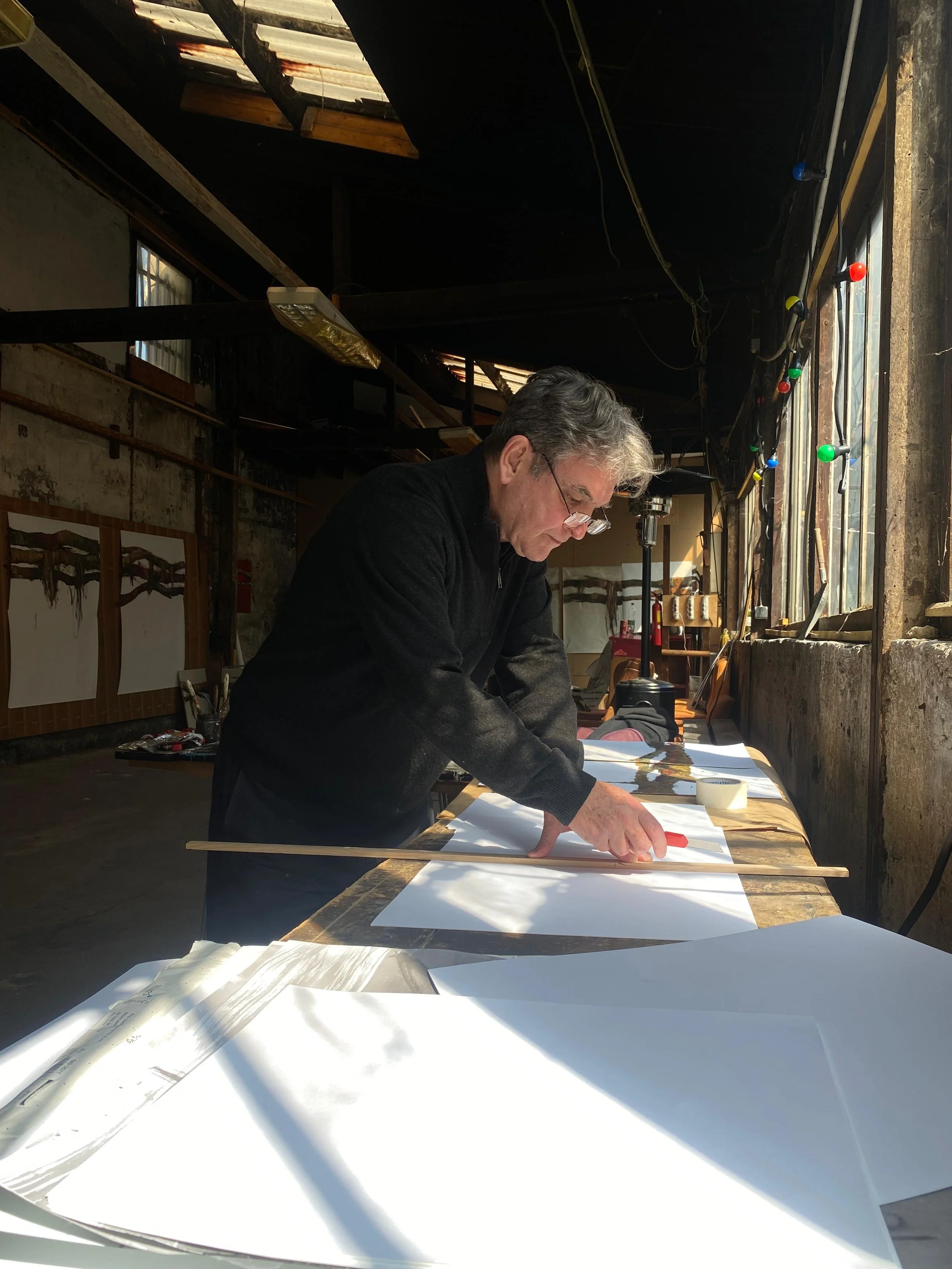
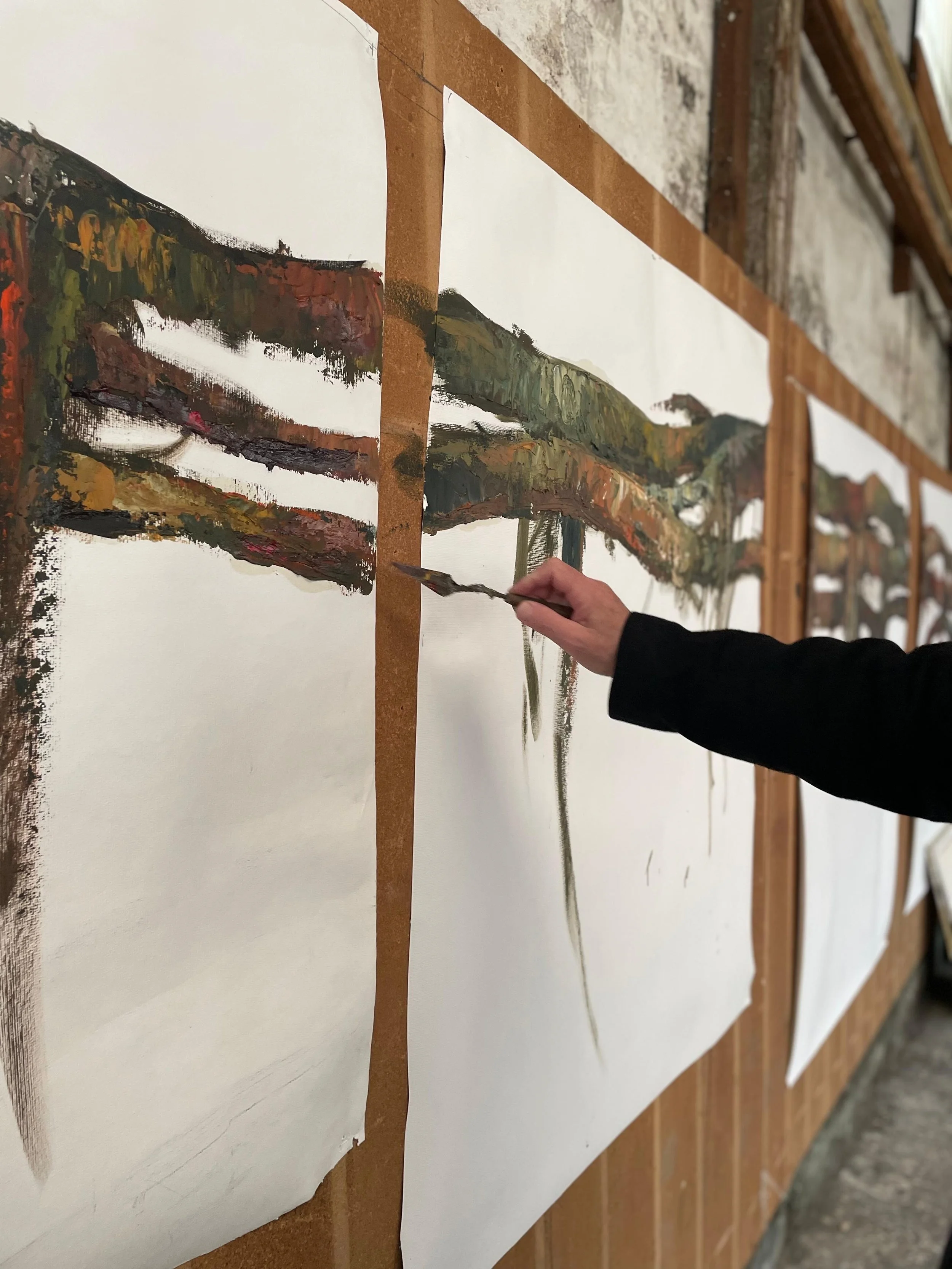
Inside the artist’s daily life
Contact the artist
Interested in working together? Fill out some info and we will be in touch shortly. We can’t wait to hear from you!